Tunnel Pasteurizer Guide for Beverage Bottling Lines
A tunnel pasteurizer is a continuous thermal-treatment machine that heats filled bottles or cans, holds them at a set temperature, and then spray-cools them to extend shelf life while protecting flavor and package quality.
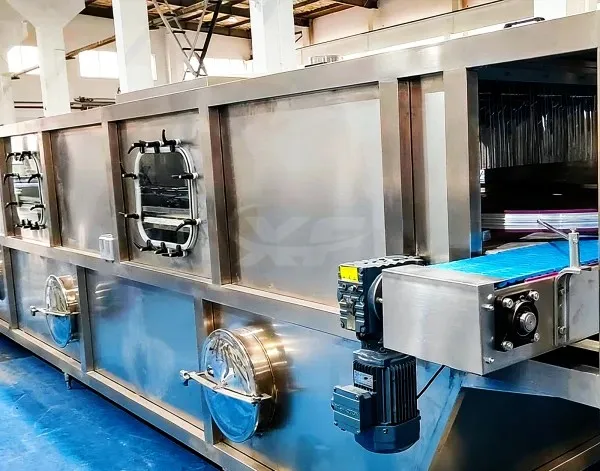
How a Tunnel Pasteurizer Works and How to Choose the Right Unit
A tunnel pasteurizer treats filled bottles or cans in a continuous sequence. A controlled heating zone applies a set temperature and time, followed by a spray-cooling section. The heat destroys harmful microorganisms, extends shelf life, and protects product quality when the temperature profile is matched to the beverage and package.
Selection starts with product type and container type, because glass, PET, and cans respond differently to heat and spray. Line speed sets the dwell time available, and the temperature and time profile must match the drink. Cooling method, steam or hot-water utilities, compressed air, drainage, and floor layout also shape the configuration. Container closure and label behavior need review before the tunnel length is fixed.
Newpeak offers pasteurizing tunnels with a capacity of 2,000 to 36,000+ bottles/cans per hour, processing times of 15–45 minutes, and pasteurization temperatures typically 65°C–80°C and adjustable. Send your product, container, and line-speed details for configuration guidance. The proposal can align the tunnel with filling, capping, labeling, and packaging equipment in the line.
The tunnel works best when the line is balanced. A tunnel that is longer than needed can overcook heat-sensitive drinks, while a short tunnel may force the line to slow down. Review the filling temperature, ambient conditions, and package wall thickness together with the temperature and time profile. The controls should record the heating, holding, and cooling stages so the line can repeat the same profile after a product change.
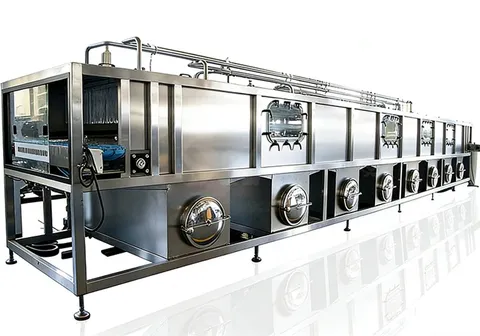
Tunnel pasteurizer, view 2
Tunnel pasteurizer specifications
| Parameter | Value |
|---|---|
| Item | Specification |
| Working Pressure | 0.25 MPa |
| Design Pressure | 0.35 MPa |
| Working Temperature | 125°C |
| Design Temperature | 145°C |
| Circulation Pump | 87 m³/h, 38 m head, 15 kW motor |
| Control System | Siemens PLC + 7-inch HMI |
| Valve System | Pneumatic angle seat valves, ball valves, and butterfly valves |
| Sensors | Temperature (0–200°C) and pressure (0–0.6 MPa) sensors |
| Material | Stainless Steel S30408 (06Cr19Ni10) |
| Dimensions (L×W×H) | Approx. 9 m × 3 m × 2.5 m (operational space: 11 m length recommended) |
Pasteurization Methods and Container Choices for Beverages
Tunnel pasteurization treats the filled and sealed package, so the heat profile includes the container and closure. Flash pasteurization heats the product in a flow before filling, then cools it, which suits products that can be filled under controlled hygiene conditions. The choice depends on product sensitivity, package type, and the shelf-life target rather than on a fixed line-speed figure. A tunnel is usually chosen for packaged products, while flash systems are common where the filler can maintain hygiene after the heat step.
For beer, tunnel pasteurization is used after filling and capping to stabilize the packaged product. The temperature and time profile must respect carbonation, foam, and flavor, and the cooling section should bring the package down gradually. Newpeak supplies beer filling and capping equipment for the same line review, so pasteurizer settings can be matched to the filler and capper.
Cans and glass bottles usually accept higher heat loads than PET, while PET needs a controlled cooling gradient to avoid deformation. The cooling tunnel spray system uses gradient cooling to prevent bottle deformation. Closure type, fill temperature, and label material can change the allowable profile, so these details belong in the trial and configuration stage.
A useful comparison starts with the package and the product, not with a headline capacity. For a carbonated drink, the pasteurizer is reviewed with the carbonated drink filling line; for juice, the hot-fill temperature and pulp level matter; for beer, foam control and oxygen pickup matter. The tunnel profile is then set with the filling and capping operation.
Utilities, Layout, and Line Integration for Pasteurizing Tunnels
A pasteurizing tunnel is supported by feed and discharge conveyors, circulation and spray pumps, heat exchangers or steam injection, controls, and water treatment for the spray circuit. In a complete juice beverage production line, the equipment list also includes water treatment equipment, fruit juice blending and sterilization systems, a hot filling machine, pasteurizer, blow-drying equipment, labeling machine, packaging equipment, and a CIP cleaning system.
The pasteurizing tunnel has a working pressure of 0.25 MPa, a design pressure of 0.35 MPa, a working temperature of 125°C, and a design temperature of 145°C. Its processing time is 15–45 minutes for the total cycle, and the pasteurization temperature is typically 65°C–80°C and adjustable. The circulation pump is 87 m³/h with 38 m head and a 15 kW motor.
The pasteurizing tunnel dimensions are approximately 9 m × 3 m × 2.5 m, with 11 m operational length recommended. Plan access for maintenance, steam or hot-water supply, compressed air, drainage, and ventilation. Keep the cooling section close to the discharge conveyor so packages move into labeling and packaging without long transfer runs.
Newpeak is based in Zhangjiagang, Jiangsu Province, China, and has over 16 years of experience manufacturing filling equipment. Standard filling machines are usually delivered within 25–35 days; customised turnkey production lines take 45–60 days depending on configuration. Newpeak accepts payment by T/T, L/C or Alibaba Trade Assurance orders. Newpeak’s manufacturing plant covers a total floor space of 4,259 m². The production plan is then built around the confirmed configuration, container size, and utility schedule.
Request a quotation
Share your product, plant space and output goal.
Or write to sales@bottlefillingsystems.com